Nizar AYADI
Doctorant Université
septembre 2021 - décembre 2024
| Équipe : |
Thèmes de recherche
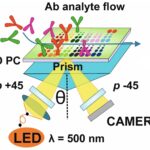
Développement d’un prototype d’analyse microfluidique basé sur les avantages des cristaux photoniques (CP). Preuve de concept utilisant les protéines de réparation ADN (RAD51). Faire le parallèle et la comparaison avec l’approche SPRi.
Projets
Parcours universitaire
Master 2 développement et contrôle des produits de santé, mention biotechnologies appliquées aux produits de santé. UFR sciences pharmaceutiques
Publications
1 publication
Nifontova, Galina; Charlier, Cathy; Ayadi, Nizar; Fleury, Fabrice; Karaulov, Alexander; Sukhanova, Alyona; Nabiev, Igor
Photonic Crystal Surface Mode Real-Time Imaging of RAD51 DNA Repair Protein Interaction with the ssDNA Substrate Article de journal
Dans: Biosensors, vol. 14, no. 1, 2024, ISSN: 2079-6374.
@article{bios14010043,

title = {Photonic Crystal Surface Mode Real-Time Imaging of RAD51 DNA Repair Protein Interaction with the ssDNA Substrate},

author = {Galina Nifontova and Cathy Charlier and Nizar Ayadi and Fabrice Fleury and Alexander Karaulov and Alyona Sukhanova and Igor Nabiev},

url = {https://www.mdpi.com/2079-6374/14/1/43

https://hal.science/hal-04449485v1},

doi = {10.3390/bios14010043},

issn = {2079-6374},

year  = {2024},

date = {2024-01-01},

urldate = {2024-01-01},

journal = {Biosensors},

volume = {14},

number = {1},

abstract = {Photonic crystals (PCs) are promising tools for label-free sensing in drug discovery screening, diagnostics, and analysis of ligand-receptor interactions. Imaging of PC surface modes has emerged as a novel approach to the detection of multiple binding events at the sensor surface. PC surface modification and decoration with recognition units yield an interface providing the highly sensitive detection of cancer biomarkers, antibodies, and oligonucleotides. The RAD51 protein plays a central role in DNA repair via the homologous recombination pathway. This recombinase is essential for the genome stability and its overexpression is often correlated with aggressive cancer. RAD51 is therefore a potential target in the therapeutic strategy for cancer. Here, we report the designing of a PC-based array sensor for real-time monitoring of oligonucleotide-RAD51 recruitment by means of surface mode imaging and validation of the concept of this approach. Our data demonstrate that the designed biosensor ensures the highly sensitive multiplexed analysis of association-dissociation events and detection of the biomarker of DNA damage using a microfluidic PC array. The obtained results highlight the potential of the developed technique for testing the functionality of candidate drugs, discovering new molecular targets and drug entities. This paves the way to further adaption and bioanalytical use of the biosensor for high-content screening to identify new DNA repair inhibitor drugs targeting the RAD51 nucleoprotein filament or to discover new molecular targets.},

keywords = {},

pubstate = {published},

tppubtype = {article}

}
2 publications
Alaouid, Mohamad; Ymbe, Parfait Kenfack; Philippot-Ménil, Vanessa; Cueff, Gwennina; Demeyer, Alexandre; Marquis, Damien; Ayadi, Nizar; Fleury, Fabrice; Benhelli-Mokrani, Houda
Aurora A mediated new phosphorylation of RAD51 is observed in Nuclear Speckles Article de journal
Dans: 2023.
@article{Alaouid2023c,

title = {Aurora A mediated new phosphorylation of RAD51 is observed in Nuclear Speckles},

author = {Mohamad Alaouid and Parfait Kenfack Ymbe and Vanessa Philippot-Ménil and Gwennina Cueff and Alexandre Demeyer and Damien Marquis and Nizar Ayadi and Fabrice Fleury and Houda Benhelli-Mokrani},

url = {http://biorxiv.org/lookup/doi/10.1101/2023.08.11.552966},

doi = {10.1101/2023.08.11.552966},

year  = {2023},

date = {2023-08-12},

urldate = {2023-08-12},

publisher = {openRxiv},

abstract = {To maintain its genome integrity, the cell uses complementary and orchestrated processes, among which is the DNA Damage Response. Pre mRNA maturation is an essential step of the DNA damage response that provides an adapted proteome in order to face genotoxic stress. We describe here a new phosphorylation of the RAD51 recombinase, on its Ser97 residue. This new Aurora A mediated RAD51 phosphorylation modulates its activity evaluated by D-loop and polymerization assays. Using recombinant proteins, we show that RAD51 is an RNA binding protein and that the Ser97 phosphorylation modulates its RNA binding affinity . Using a specifically generated antibody we revealed that this Ser97 phosphorylation is correlated with RAD51 localization into the RNA maturation membrane less organelles, Nuclear Speckles. We describe here for the first time the presence of RAD51 DNA repair factor within the Nuclear Speckles, raising the hypothesis of a possible role for RAD51 in splicing modulation. This point is of particular interest in the context of splicing profiles modulations associated with radio and/or chemoresistance.

},

howpublished = {bioRxiv},

keywords = {},

pubstate = {published},

tppubtype = {article}

}
Nifontova, Galina; Petrova, Irina; Gerasimovich, Evgeniia; Konopsky, Valery N.; Ayadi, Nizar; Charlier, Cathy; Fleury, Fabrice; Karaulov, Alexander; Sukhanova, Alyona; Nabiev, Igor
Label-Free Multiplexed Microfluidic Analysis of Protein Interactions Based on Photonic Crystal Surface Mode Imaging Article de journal
Dans: International Journal of Molecular Sciences, vol. 24, no. 5, 2023, ISSN: 1422-0067.
@article{ijms24054347b,

title = {Label-Free Multiplexed Microfluidic Analysis of Protein Interactions Based on Photonic Crystal Surface Mode Imaging},

author = {Galina Nifontova and Irina Petrova and Evgeniia Gerasimovich and Valery N. Konopsky and Nizar Ayadi and Cathy Charlier and Fabrice Fleury and Alexander Karaulov and Alyona Sukhanova and Igor Nabiev},

url = {https://www.mdpi.com/1422-0067/24/5/4347

https://hal.science/hal-04814684v1},

doi = {10.3390/ijms24054347},

issn = {1422-0067},

year  = {2023},

date = {2023-02-22},

urldate = {2023-02-22},

journal = {International Journal of Molecular Sciences},

volume = {24},

number = {5},

abstract = {High-throughput protein assays are crucial for modern diagnostics, drug discovery, proteomics, and other fields of biology and medicine. It allows simultaneous detection of hundreds of analytes and miniaturization of both fabrication and analytical procedures. Photonic crystal surface mode (PC SM) imaging is an effective alternative to surface plasmon resonance (SPR) imaging used in conventional gold-coated, label-free biosensors. PC SM imaging is advantageous as a quick, label-free, and reproducible technique for multiplexed analysis of biomolecular interactions. PC SM sensors are characterized by a longer signal propagation at the cost of a lower spatial resolution, which makes them more sensitive than classical SPR imaging sensors. We describe an approach for designing label-free protein biosensing assays employing PC SM imaging in the microfluidic mode. Label-free, real-time detection of PC SM imaging biosensors using two-dimensional imaging of binding events has been designed to study arrays of model proteins (antibodies, immunoglobulin G-binding proteins, serum proteins, and DNA repair proteins) at 96 points prepared by automated spotting. The data prove feasibility of simultaneous PC SM imaging of multiple protein interactions. The results pave the way to further develop PC SM imaging as an advanced label-free microfluidic assay for the multiplexed detection of protein interactions.},

keywords = {},

pubstate = {published},

tppubtype = {article}

}
1 publication
Ayadi, Nizar; Lafont, Florian; Charlier, Cathy; Benhelli-Mokrani, Houda; Sokolov, Pavel; Sukhanova, Alyona; Fleury, Fabrice; Nabiev, Igor
Comparative Advantages and Limitations of Quantum Dots in Protein Array Applications Chapitre d'ouvrage
Dans: Quantum Dots, vol. 2135, p. 259–273, Springer, New York, NY, Humana, 2020.
@inbook{cEQ3:ayadi_FLEURY:2020,

title = {Comparative Advantages and Limitations of Quantum Dots in Protein Array Applications},

author = {Nizar Ayadi and Florian Lafont and Cathy Charlier and Houda Benhelli-Mokrani and Pavel Sokolov and Alyona Sukhanova and Fabrice Fleury and Igor Nabiev},

year  = {2020},

date = {2020-04-01},

booktitle = {Quantum Dots},

volume = {2135},

pages = {259--273},

publisher = {Springer},

address = {New York, NY},

edition = {Humana},

series = {Methods in Molecular Biology},

keywords = {},

pubstate = {published},

tppubtype = {inbook}

}
1 publication
Lafont, Florian; Ayadi, Nizar; Charlier, Cathy; Weigel, Pierre; Nabiev, Igor; Benhelli-Mokrani, Houda; Fleury, Fabrice
Assessment of DNA-PKcs kinase activity by quantum dot–based microarray Article de journal
Dans: Scientific Reports, vol. 8, no. 1, p. 1–12, 2018, ISSN: 20452322.
@article{Lafont2018,

title = {Assessment of DNA-PKcs kinase activity by quantum dot–based microarray},

author = {Florian Lafont and Nizar Ayadi and Cathy Charlier and Pierre Weigel and Igor Nabiev and Houda Benhelli-Mokrani and Fabrice Fleury},

doi = {10.1038/s41598-018-29256-2},

issn = {20452322},

year  = {2018},

date = {2018-01-01},

journal = {Scientific Reports},

volume = {8},

number = {1},

pages = {1--12},

abstract = {Therapeutic efficacy against cancer is often based on a variety of DNA lesions, including DNA double-strand breaks (DSBs) which are repaired by homologous recombination and non-homologous end joining (NHEJ) pathways. In the past decade, the functions of the DNA repair proteins have been described as a potential mechanism of resistance in tumor cells. Therefore, the DNA repair proteins have become targets to improve the efficacy of anticancer therapy. Given the central role of DNA-PKcs in NHEJ, the therapeutic efficacy of targeting DNA-PKcs is frequently described as a strategy to prevent repair of treatment-induced DNA damage in cancer cells. The screening of a new inhibitor acting as a sensitizer requires the development of a high-throughput tool in order to identify and assess the most effective molecule. Here, we describe the elaboration of an antibody microarray dedicated to the NHEJ pathway that we used to evaluate the DNA-PKcs kinase activity in response to DNA damage. By combining a protein microarray with Quantum-Dot detection, we show that it is possible to follow the modification of phosphoproteomic cellular profiles induced by inhibitors during the response to DNA damage. Finally, we discuss the promising tool for screening kinase inhibitors and targeting DSB repair to improve cancer treatment.},

keywords = {},

pubstate = {published},

tppubtype = {article}

}